Armenian News Network / Groong****
Sultan Abdul Hamid II: What did he really look like? Caricatures versus photographs.
Special to Groong by Eugene L. Taylor and Abraham D. Krikorian
Long Island, NY
There is little disagreement that Sultan Abdul Hamid II was a very important figure in the long and sad history of the Armenians, but even today he remains more of a critically understudied and elusive figure than one might imagine. The late Armenian genocide denialist Professor Stanford J. Shaw described him as Òthe last great Ottoman SultanÓ (see Shaw, 1991 pg. 179). According to Shaw, his plans for doing all sorts of wonderful things were impressive (see Shaw, 1973 for a Ôshopping or aspirations listÕ). Oh? Cynics (realists?) such as ourselves might even venture to say that an effort, albeit a useless one in our not-so-humble opinion, has been made to rehabilitate Abdul Hamid IIÕs image (see for example in addition to Shaw, Sever, 2010). Just what it was about Ôadministration through massacreÕ and ÒThy shalt not killÓ that the Red Sultan did not seem to understand eludes us.
Because of our interest in various aspects of imagery and photographs dealing with the various ÔpersecutionsÕ of the Armenians, culminating in the Armenian Genocide, we have asked ourselves a number of times ÒHow accurate, in the broadest sense of the word, are the various depictions of the Sultan in caricature, cartoons, photographs in books or illustrated articles and essays?Ó We all know that a good caricaturist can rain havoc on anyone. On the other hand, some people are, simply put, a gift on a silver platter to the caricaturist and cartoonist. Sultan Abdul Hamid II was one of these, not just because of his appearance but because of his dastardly deeds.
A more important question might perhaps be whether there are photographs of this infamous sultan that are attested, and better yet attributed?
Despite Sultan Abdul HamidÕs supposed interest in photography (Allen, 1984; Micklewright, 2000; Roberts, 2013 and references there cited), he himself seems to have been, for various reasons including paranoia, very camera shy, if we care to put it diplomatically. Few outsiders knew what he really looked like. Note the qualifications in the caption to the image below.
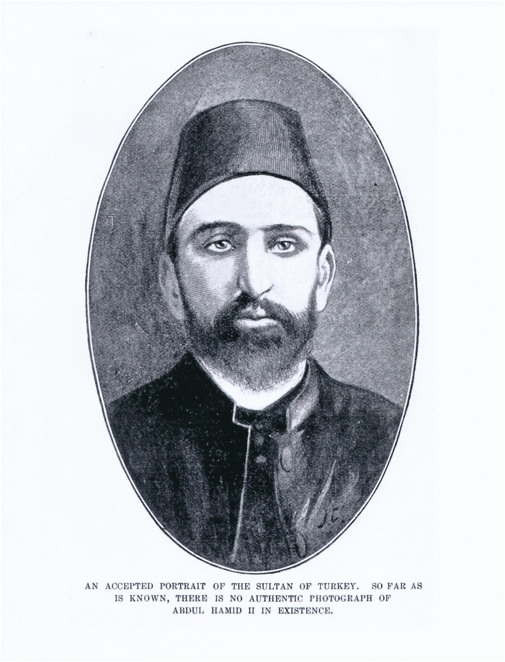
From The Junior Munsey vol. 9, no. 1 October 1900 pg. 101.
We imagined at one time that his Ôbosom friendÕ and alleged confidant Professor Arminus Vambery might have enabled him to include an autographed or inscribed presentation portrait of the Sultan in either tome of his 2 volume work The Story of My Struggles, The Memoirs of Arminius Vambery (1904) [https://archive.org/details/storymystruggle00vmgoog].
No luck on that front.
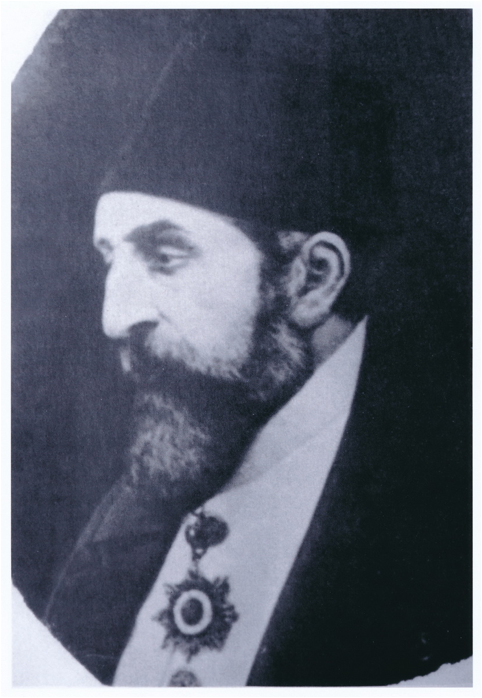
One of the very few, perhaps the only truly close-up photograph that we have located and feel fairly certain that its date is approximated more or less accurately is the one found opposite pg. 159 in the memoir by Sultan Abdul Hamid IIÕs daughter, the Princess Ach Osmanoglou (1887-1960) entitled ÒAvec Mon Pre Le Sultan Abdulhamid de son palais a sa prisonÓ (L’Harmattan, Paris 1991). The original version was translated from Turkish into French. The caption under the photograph reads in translation ÒSultan Abdulhamid II around the middle of his reignÓ — since he ascended 31 August 1876 and was deposed 27 April 1909 we may date the photograph around 1892 or 1893 or so. Born in 1842, he would have been about 50 years old.
This photograph provides us with a reasonable fit since we have wanted to have a fairly reliable image of the sultan around the period of the Hamidian massacres, say around 1894-1896. The caption goes on to say ÒHe had allowed his beard to grow, following the tradition of the sultans. The only sultans who did not have a beard were Selim I, Osman II, Mourad V and Mehmed VI Vahideddin.Ó One should add at least one more, namely Sultan Mehmed V, who was active, or more accurately inactive, during the Armenian Genocide when the Young Turk hoodlums and criminals administered the Empire.
We appreciate very much the kind permission to use this copyrighted photograph - ©Editions lÕHarmattan (Paris).
http://www.editions-harmattan.fr/index.asp?navig=catalogue&obj=livre&no=5278
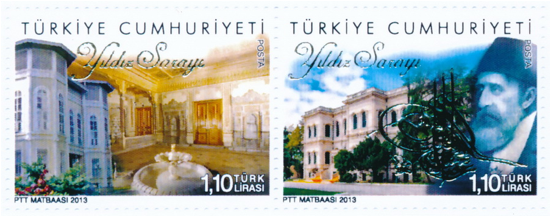
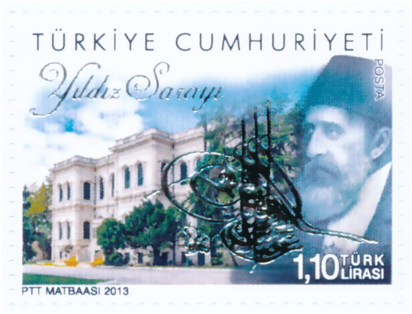
We have also in our quest for images wondered whether there are hoards of photographs of Sultan Abdul Hamid II in any of the various Ottoman Archives? When we saw the image used on a stamp (1.10 Turkish lira - around 50 cents U.S.) issued in 2013 by the so-called Republic of Turkey featuring various Imperial palaces we wondered if there was any special reason, other than the obvious propagandistic one so as to make him seem benign, the one selected was used. Also, he looks to us as rather pale-faced not swarthy as he apparently was (see below). Surely there had to be others from which a better selection might have been made? There were certainly ÔroyalÕ photographers approved by the Sultan.
For interested independent researchers and publicists such as ourselves, most photographs or images pertaining to almost ÔeveryoneÕ, and that includes Sultan Abdul Hamid II of course, are at worst undated, or at best, incompletely or imprecisely dated. Only a very few go so far as to give a fairly precise time period. One of the more interesting contemporary books, a now fairly rare volume written by Will Seymour Monroe, entitled ÒTurkey and the TurksÓ (1907) has some interesting photographs. The volume includes a photograph that is well-known and has the added bit of information that the Sultan is 34 — making the supposed date of the photograph 1876. It seemed safe to speculate that it dated from the time of his enthronement. There was one minor difficulty however, identical copies of the photograph exist that show that photographers W. & D. Downey were responsible for the photograph. The photograph was, we are told by Roberts (2013, pg. 18) , taken in Buckingham Palace in London by William Downey, Queen VictoriaÕs photographer in 1867! (Incidentally, we have also seen it stated somewhere, we forget where, that it was at Balmoral Castle. Whatever.) Abdul Hamid was in England during the summer of 1867 when as an Ottoman prince he accompanied his Uncle Sultan Abdul Aziz to Europe, ultimately to attend the Exposition Universelle in Paris. There is a photograph of Prince Abdul Hamid taken then that he kept as a calling card (carte de visite). He liked cartes de visites. His visage is younger than the one where he is clad in royal finery. In any case, it shows that there are opportunities to concern oneself, if one is so inclined- which we are not in this case, to look into matters a bit more deeply.
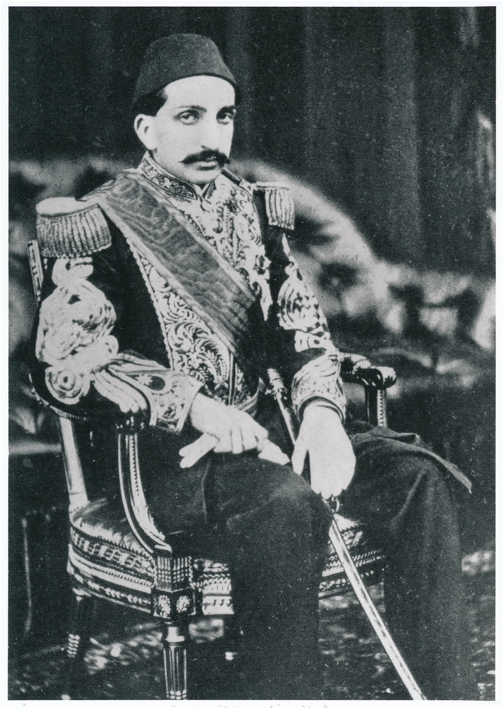
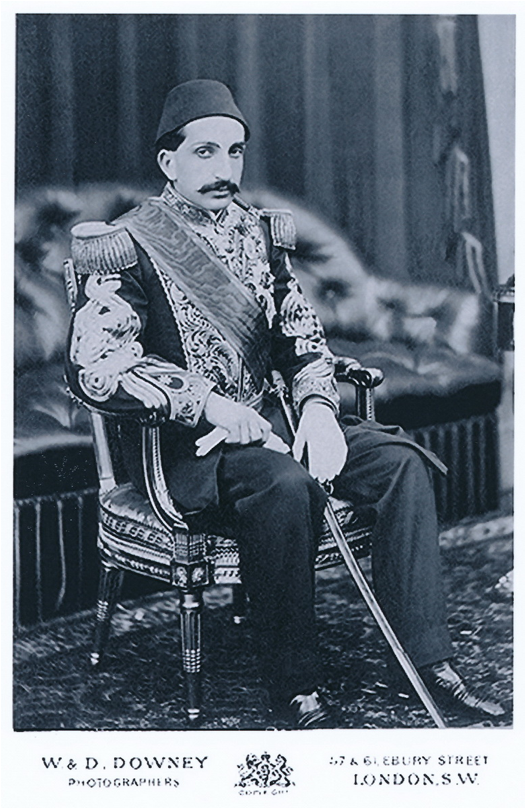
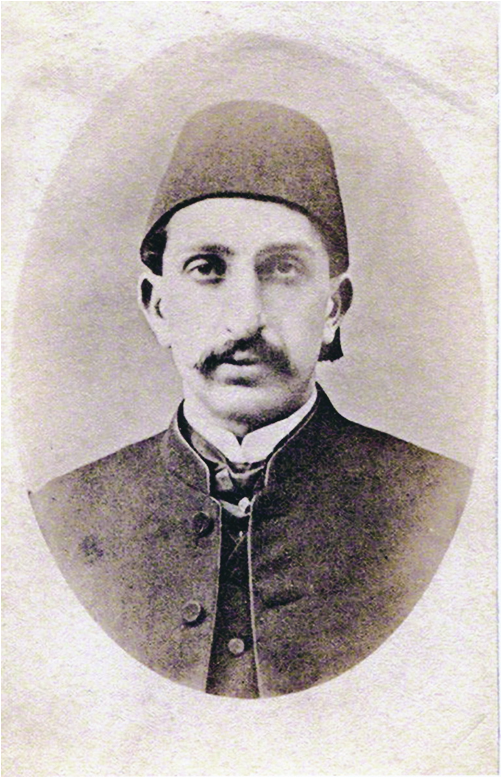
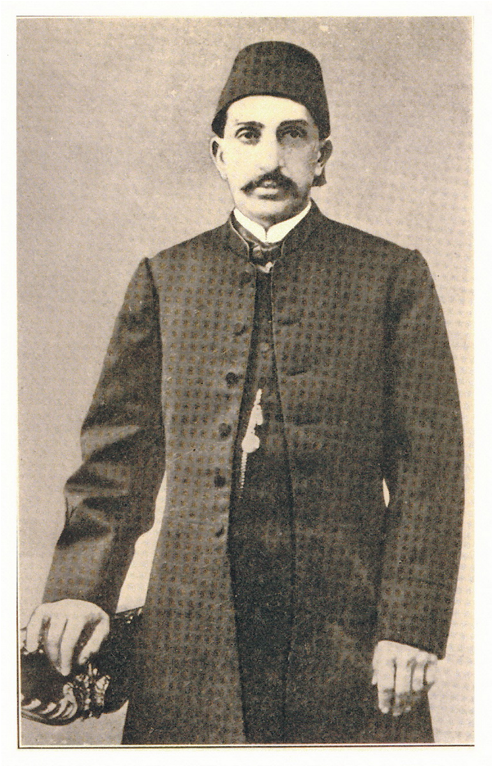
Another photograph said to derive from 1868 is presented below. A copy of this may be found on Wikipedia. He perhaps ÔlooksÕ the same, or younger or older than the one taken in 1867 in his imperial garb. In any case, it is a real photograph. Too early to concern us seriously here.
 s
s
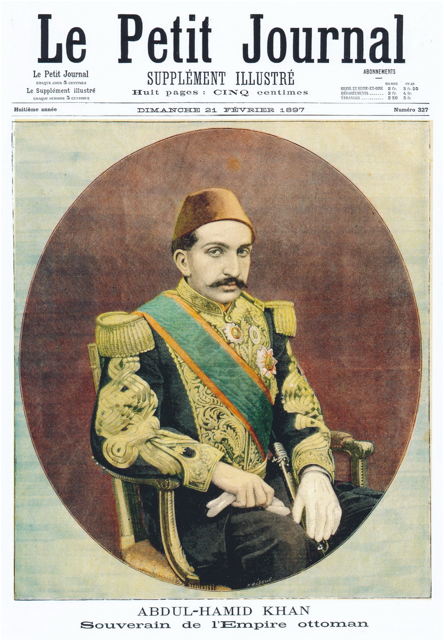
All this means is that the photograph usually used to show him as SULTAN simply is not accurate. It also seems that anyone interested in publishing a picture of the Sultan, inevitably from outside the Empire, from that period onwards for whatever purposes had to make do with the likes of the princely image in costume well into the 1890s, without necessarily knowing or caring when the photograph was taken. See below, for example, a color version on the cover of Le Petit Journal (Supplment Illustr) Paris 21 February 1897. In contrast, his Uncle Sultan Abdul Aziz Ôplayed photographs like a violinÕ for publicity as the saying goes (Roberts, 2013 for details).
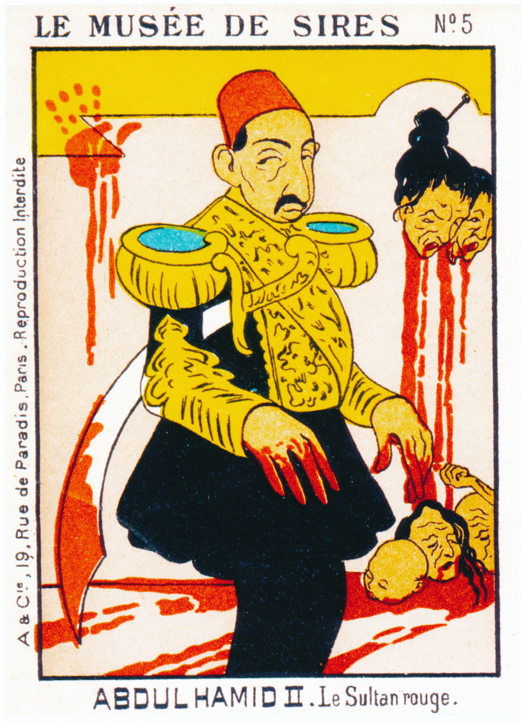
The Muse des Sires photo postcard below shows the bloodied hands of the Sultan, and the princely photo could well have served as a model for satirical purposes. (There is, incidentally, a considerably larger (52 x 36 cm.) version in Muse des Souverains, portfolio size collection.)
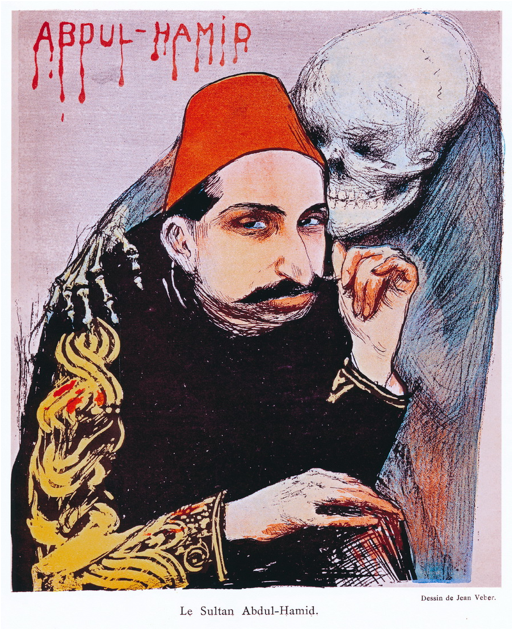
A similar caricature portraying the sultan as the evil and wicked, sinister-looking murderer dripping blood that he was, may be found on the cover of Le Rire (Paris) 29 May 1897 No. 134. This was drawn by the accomplished artist Jean Veber who drew for the widely read satirical journals Assiette au Beurre and Le Rire etc. For an online version dating from 1900 see also https://archive.org/stream/MuseeDesSouverains1900#page/n13/mode/2uph
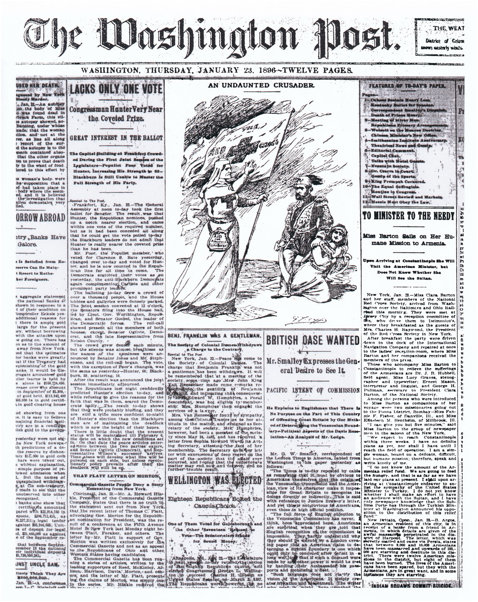
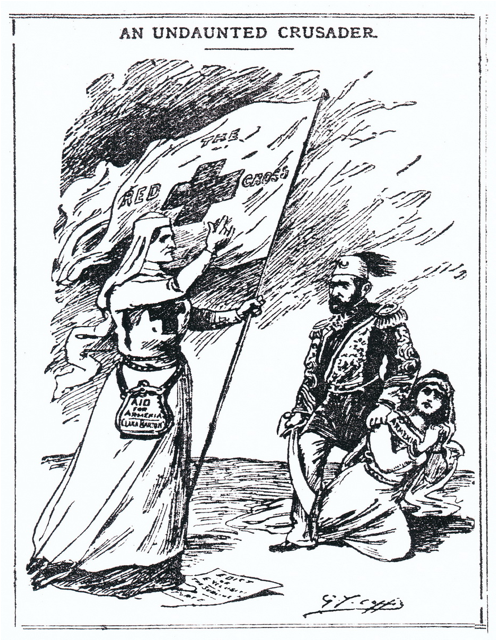
The drawing on the January 23, 1896 front page of The Washington Post (the Post of yesteryear, not nowadays) is rather crude, even amateurish, but shows some of the features apparent in what we have presented above. No claim can be made that it represents a particularly good likeness. The rendering of Clara Barton is no masterpiece of fidelity either.
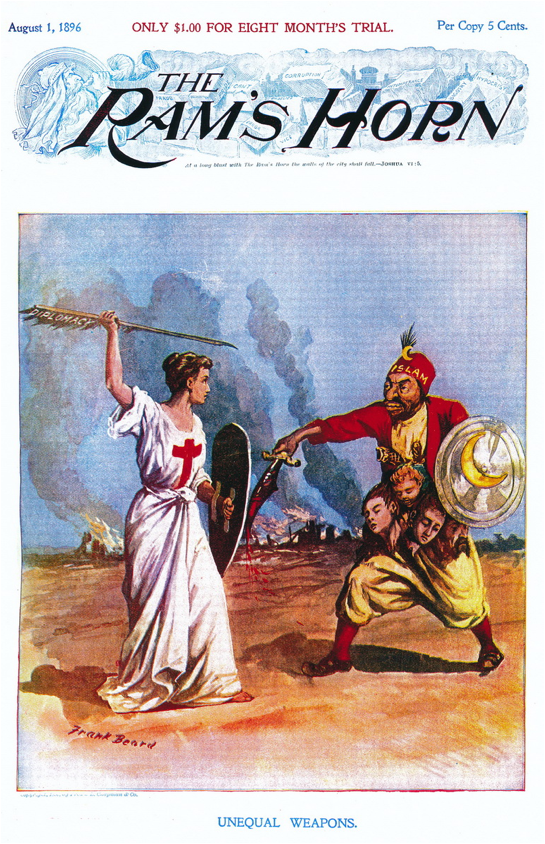
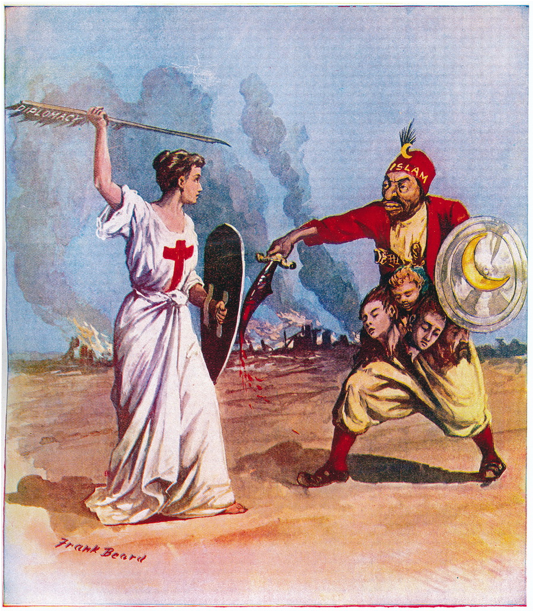
The same genre of imagery may be found in The RamÕs Horn (published in Chicago) below.
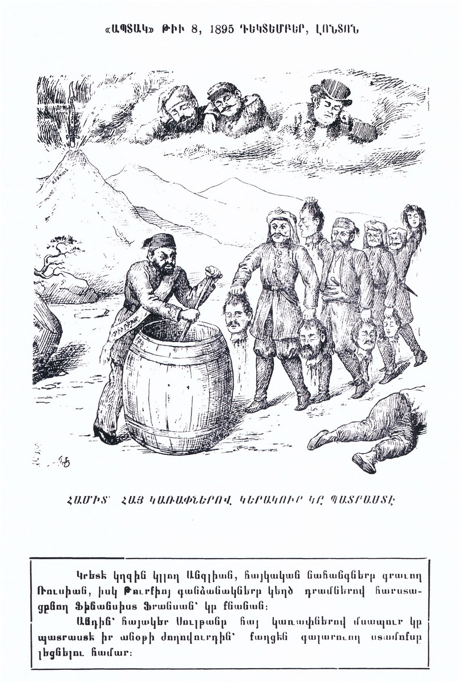
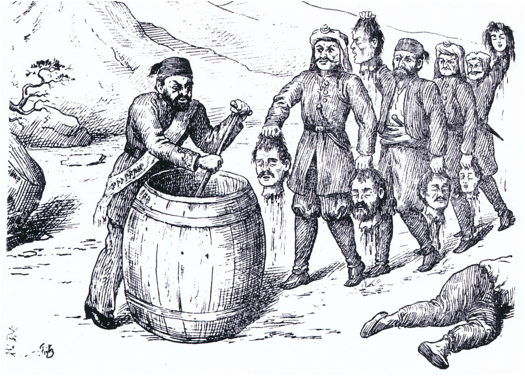
A cartoon, originally published in Aptag [The Slap] but taken here from PatmutÕiwn S.D. HnchÕakean KusaktsÕutÕean: 1887-1962 [ÒHistory of the Social Democratic Hunchagian PartyÉÓ] shows a particularly gruesome scene. The Sultan is drawn in a fashion reminiscent of the ones just shown. We need not go into detail. The message is clear. (For anyone interested in Armenian caricatures etc. see Anahide Ter-MinassianÕs 1995 excellent paper on the satirical drawings in the Armenian periodical Gavroche from 1908-1920.)
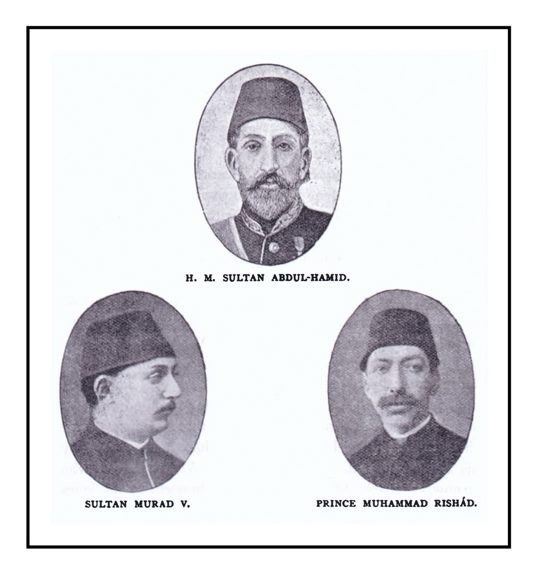
Below we see images of the Sultan and his deposed brother Sultan Murad V (variously described as alcoholic, feeble-minded, mentally deranged, suicidal etc.) and his brother Prince Mehmed Reshid who would ascend upon Sultan Abdul HamidÕs forced deposition to the Ottoman throne as Sultan Mehmed V (Imperial and Asiatic Quarterly Review 1, 1896 pg. 68). The two lower ones appear to be real, not so with the one of Abdul Hamid II. WeÕll dispense with this one as well.
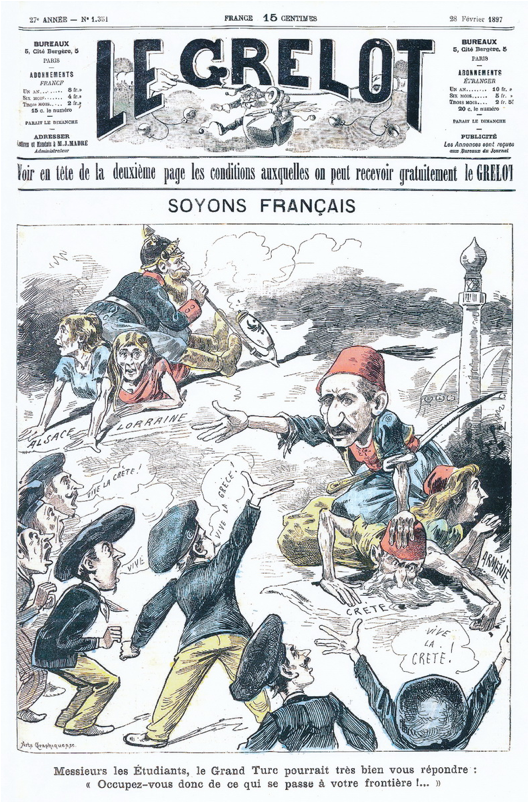
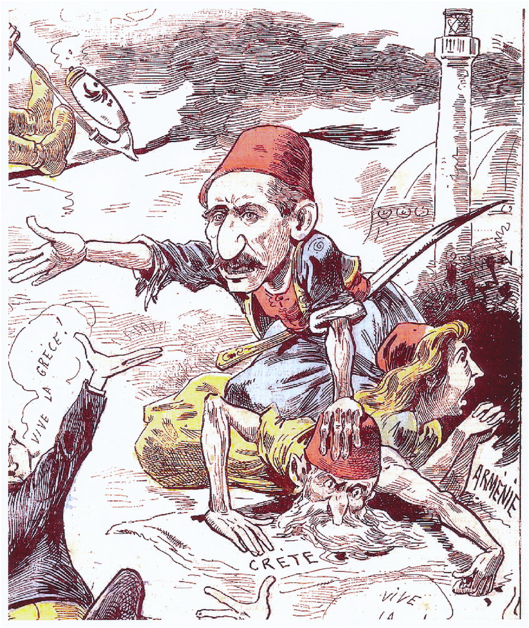
A satirical rendering of the Sultan, the Grand Turk, by Ėdouard Ppin from the cover of Le Grelot (No. 1351, Paris) 28 February 1897 capitalizes beautifully on Abdul HamidÕs prominent nose. He advises student protesters and demonstrators chanting ÒLong Live Crete, Long Live GreeceÓ (even as Armenia is shown pushed downwards and suppressed violently), and advising that ÔweÕ should be French [behave like true Frenchmen] and concern yourselves with what goes on at your own borders! (Note German suppression of Alsace-Lorraine at the upper left.)
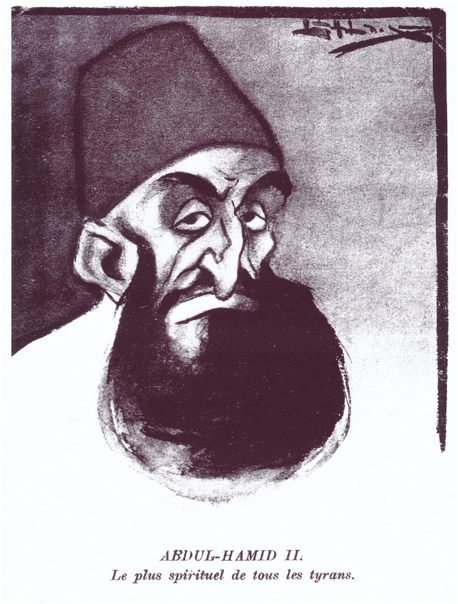
With time, portrayal of Sultan Abdul Hamid IIÕs nose seems to have become larger and a bit more crooked (Dick Tracy-like?). The image below is taken from a post card we own sarcastically labeling the Sultan as the Ômost spiritual of the tyrantsÕ but the same caricaturization also appeared in LÕAssiette au Beurre no. 9 issued on 8 August 1901 in the series ÒLes SouverainsÓ by Leal Da Camara, pg. 302. In that issue the talented Da Camara is merciless on other sovereigns as well.
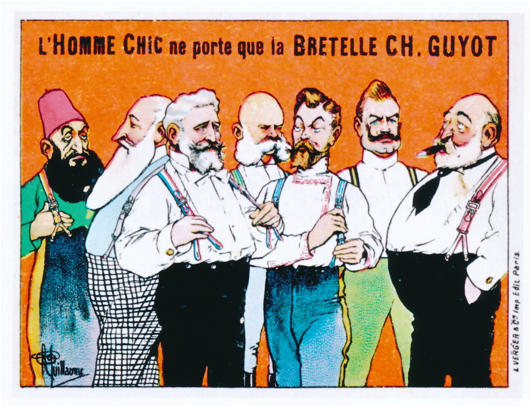
The same type of sinister, even sanguine face may be seen at the left of the card below. The claim is made that chique, fashionable, men only wear suspenders made by Betelle Ch. Guyot. Sultan Abdul Hamid II, the butcher, is shown using said suspenders to hold up his butcherÕs apron. Just why the apron appears clean and bloodless is anyoneÕs guess. The others, all sovereigns, use them to hold up their trousers. Note the pot-bellied King Edward VII of Great Britain on the far right.
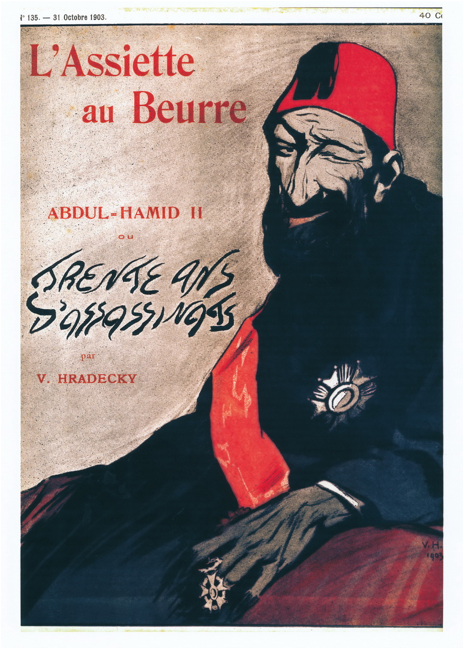
The SultanÕs nose is again and inevitably a feature in the image on the cover of LÕAssiette au Beurre 31 October 1903. The headline reads ÒAbdul-Hamid II, or Thirty Years of AssassinationsÓ or, as we prefer since it is as defensible both in fact and translation Òof Murders.Ó
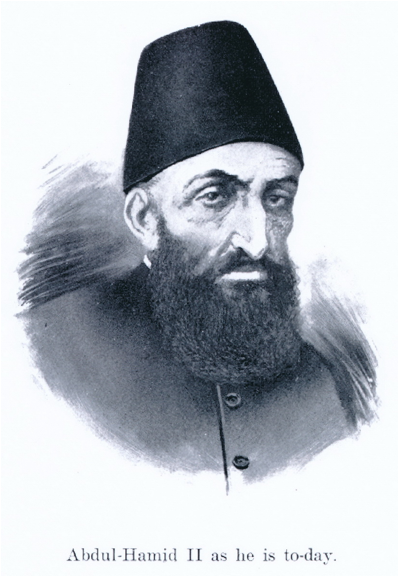
A work written by Georges Dorys, published in 1901 in English translation, includes a frontispiece image of the Sultan. Although it too seems to us not to be from a ÔrealÕ photograph, it presumably is fairly accurate. Dorys got himself in trouble over his writings and was apparently condemned to death should he ever showed up on Turkish territory. His father was the late Prince of Samos, a former minister of the Sultan, and at one time Governor of Crete. As such Georges Dorys was held to be in a good position to know a fair amount about the SultanÕs personality, and presumably what he looked like. It seems likely that this was used as a base by some of the caricaturists.
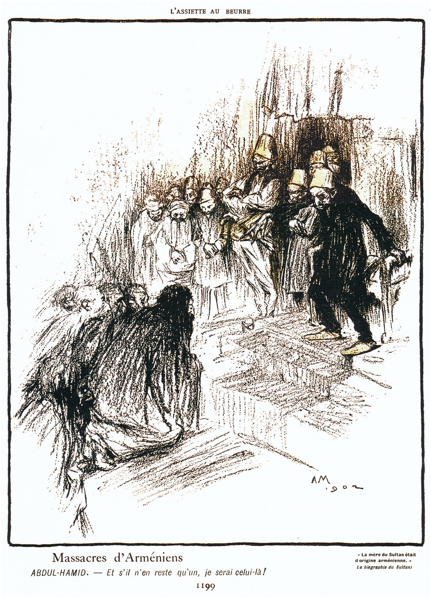
The following caricatures that we have selected for use in this general overview focus especially on the Armenian massacres. The first, from LÕAssiette au Beurre 16 August 1902 pg. 1199 more than alludes to the SultanÕs alleged ÔArmenian connection.Õ The captions says ÒAnd if there is only one left, IÕll be the one!Ó [It adds on the lower right that ÒThe SultanÕs mother was Armenian.Ó]
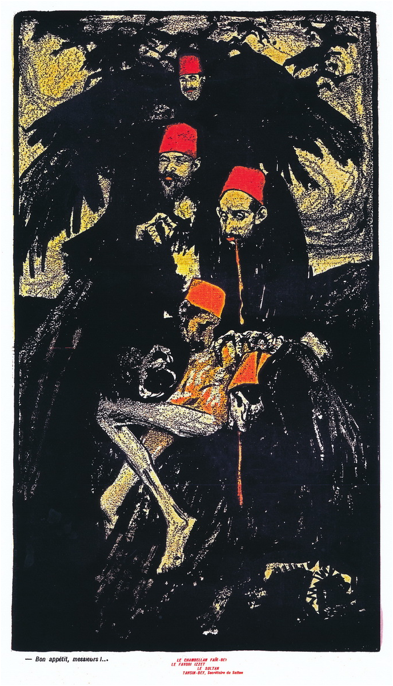
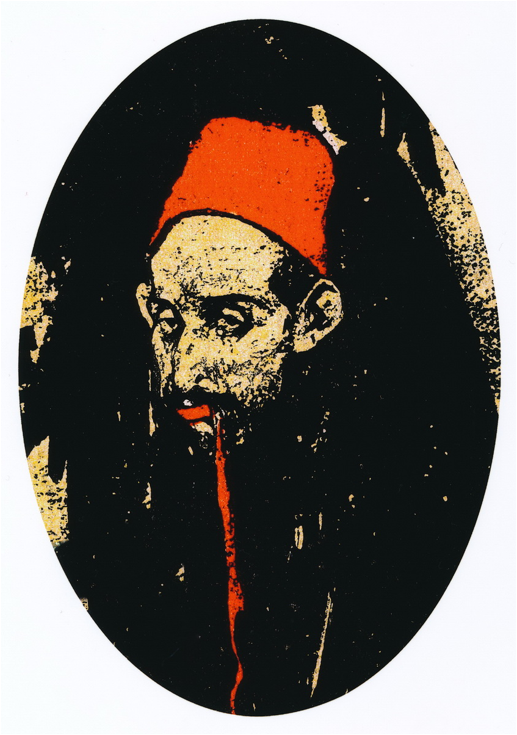
The two-page bloody red and black caricature in the same issue which reads ÒBon appetit gentlemenÓ shows the Ottoman ghoulish element at play or work? The upper head is that of Faik Bey the chamberlain, below him is that of Izzet the favorite, then the Sultan, and the bottom-most the SultanÕs secretary Tahsin Bey. Note the vampirish face and blood dripping from the SultanÕs bloody mouth in the enlargement.
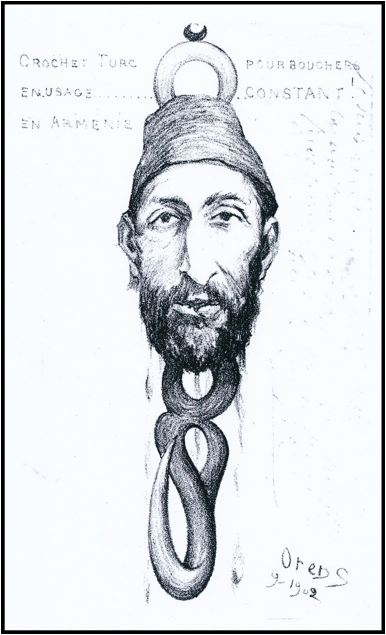
The ever-conspicuous huge, prominently crooked nose is a key element in this September 9, 1902 post card image showing the SultanÕs head depicted as ÒA Turkish hook in regular use to butcher in Armenia.Ó Just who the artist Oreds was, has so far eluded us.
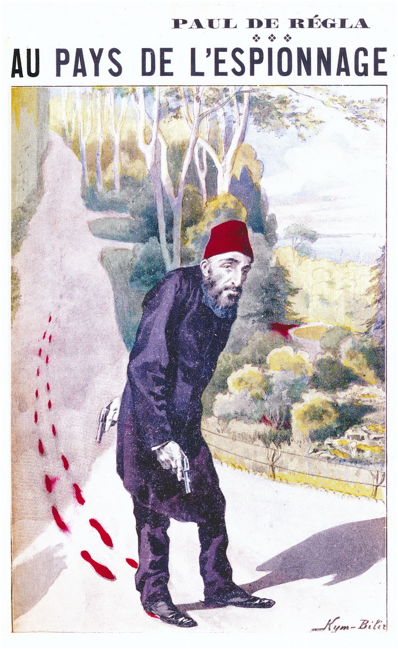
Paul de RglaÕs Au pays de lÕespionnage (Paris, 1902) shows Abdul Hamid leaving a bloody trail. The rendition of the face seems fairly good, leaving the message as to the twin pistols and the bloody footprints to suggest to the viewer his paranoia.
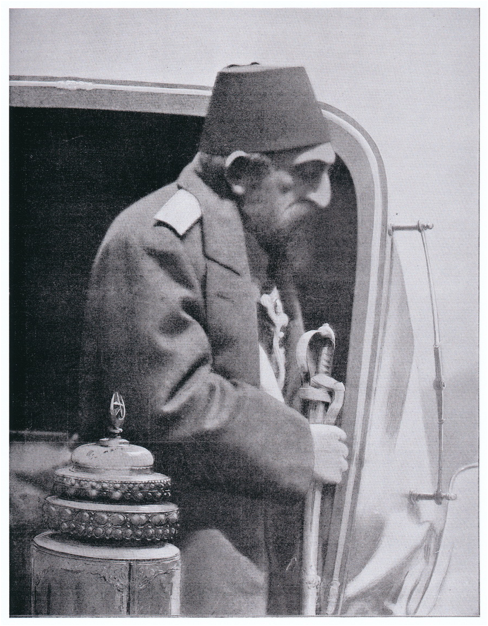
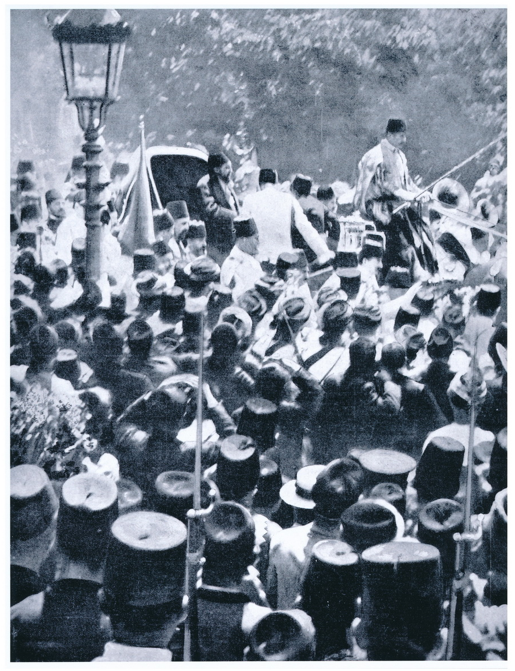
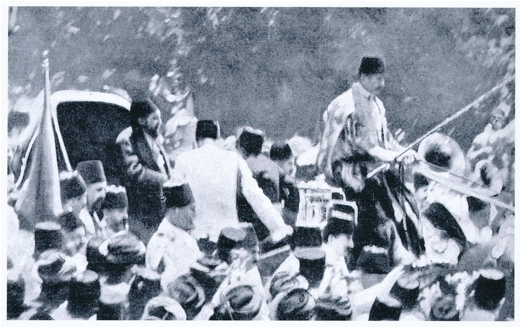
By 1908 we are able to finally see a real photograph of the Sultan descending from his carriage. This was on the cover of the French weekly LÕIllustration 22 August 1908.
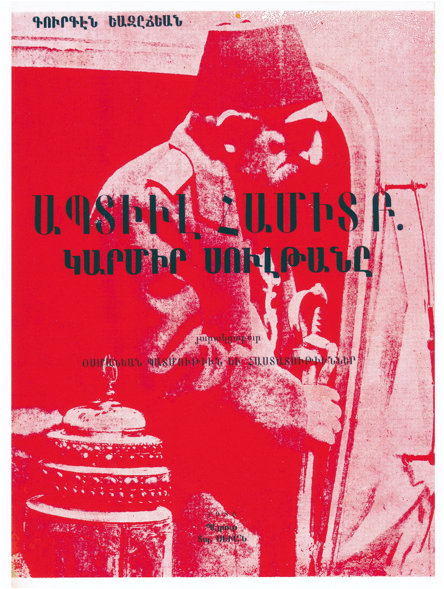
This photo was also used considerably later on the cover of YazigianÕs volume in Armenian on the Red Sultan. Aptiwl Hamit B., Karmir SultÔane: HarakitsÔ Osmanean patmutÔiwn ew hastatutÔiwnner by Gurgen Yazechean [K. Yazidjian] published in 1980. This 871 page tome was printed in Beirut (PeyrutÔ : Tp. Sevan). [Excuse us once more for using the ridiculous transliteration used in World Cat but this allows anyone interested to find the volume in the world outside of Armenian libraries.]
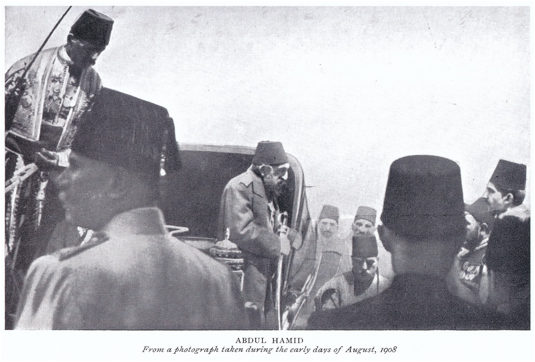
A fuller view of the same scene that is rarely encountered is shown below. It derives from Sir Edwin PearsÕ Forty Years in Constantinople (1916) facing pg. 246. The shots above were either cropped for publication or were taken at closer range.
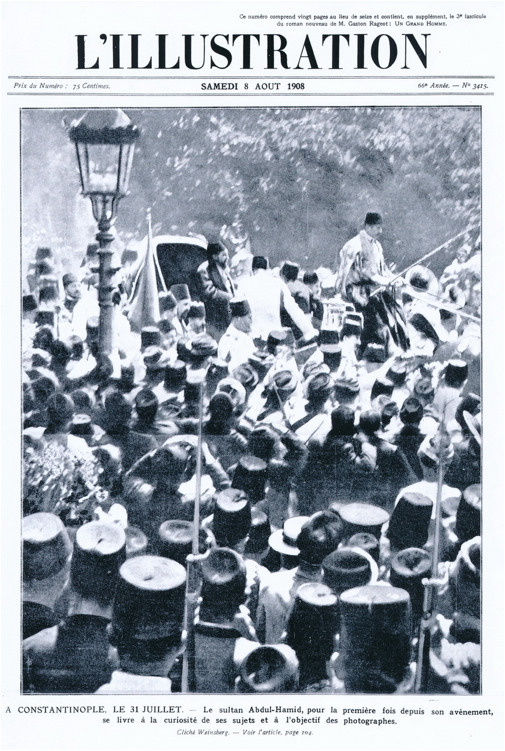
Some later photographs of the Sultan Abdul Hamid II which are dated exactly and attributed, at least in part, exist. On the front cover of the French illustrated weekly LÕIllustration Saturday 8 August 1908 there is a photograph, clearly taken at a distance, and from a high vantage point, of Sultan Abdul Hamid II, Òfor the first time since his ascension to the throne, avails himself to the curiosity of his subjects and photographers.Ó
This photograph is a bit troublesome to us not only because it was taken at a distance, but we believe that it is significant that in the same journal on 22 August 1908 the cover image of Sultan Abdul Hamid II shows him thinner, more round-shouldered, his nose more prominent, his beard perhaps a bit more greyish (?). Could stress have ÔagedÕ him that much in a few weeks? Apparently.
 **
**
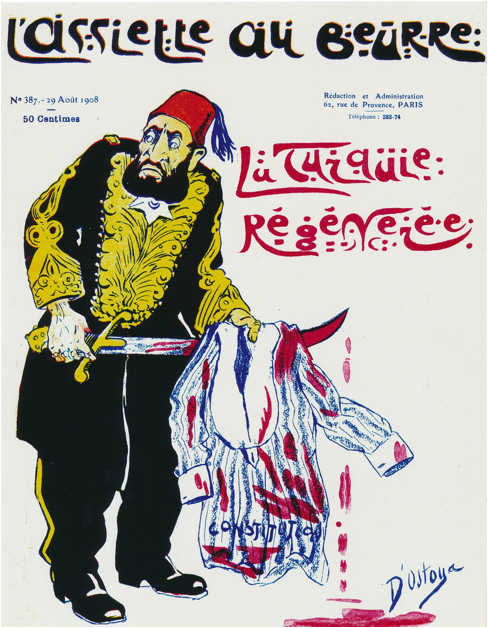
LÕAssiette au Beurre 29August 1908 presented a black-bearded, suspicious-looking Sultan Abdul Hamid II wiping his bloody sword on the sacrosanct Constitution, which to him was clearly Ôonly a piece of paper.Õ A new era of regeneration for Turkey is at hand! As the old time Armenian immigrants used to say sarcastically ÒAdel havadahÓ- believe that too! No gullibility there.
It will also be of some interest to quote from the same issue of LÕIllustration 8 August 1908 wherein an oval portrait taken from a miniature of the Sultan states in its caption that this is the sole portrait of the Sultan taken before the 31 July 1908 Selamlik photograph on the cover of the issue from which we have made the scans and enlargements included here. The image was supposedly provided by the Sultan himself for reproduction.
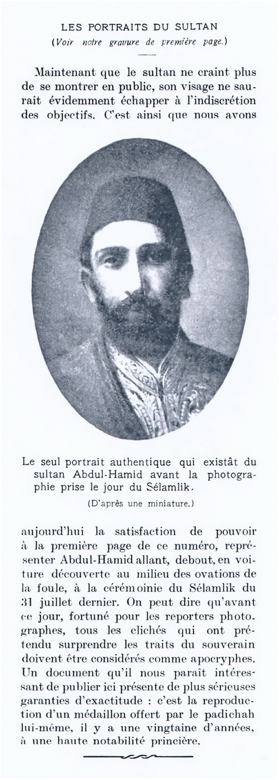
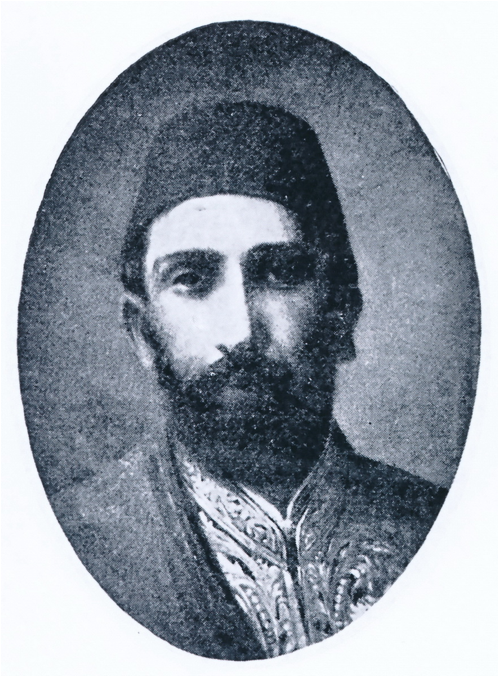
It further states that all other images and portrayals should be considered to be apocryphal!
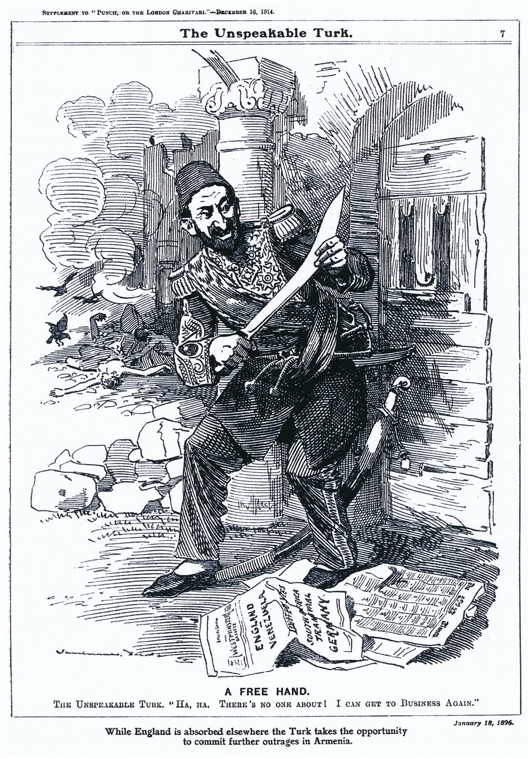
The last few images we present here derive from Punch in 1908 and 1909 and donÕt seem bad renditions to us as to what he may have looked like. Perhaps they were drawn with a real image(s) at hand? The third one was first published in January 18, 1896 but was reissued on December 16, 1914 in a collection called ÒThe Unspeakable TurkÓ. ÔDj vu all over again?Õ but with different players.
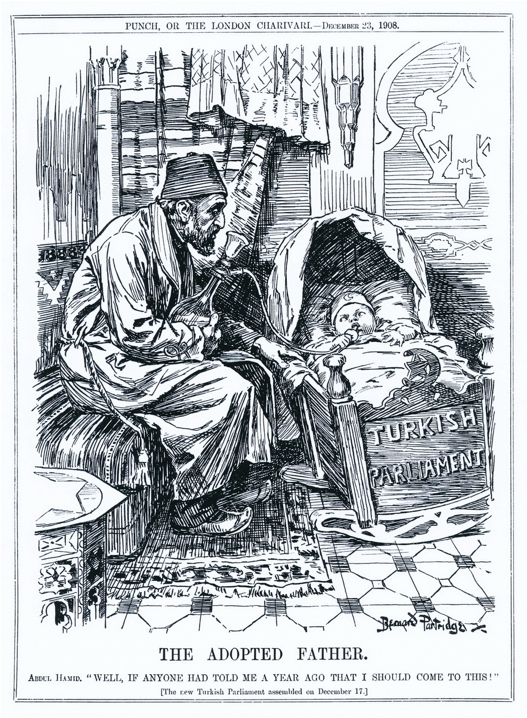
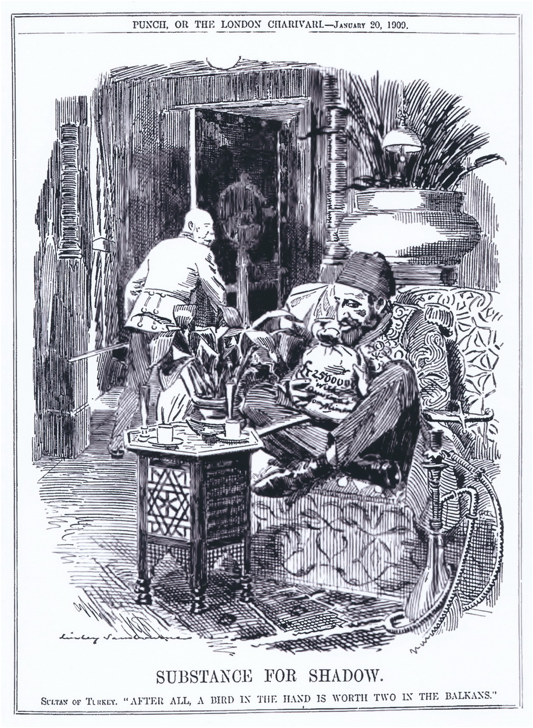
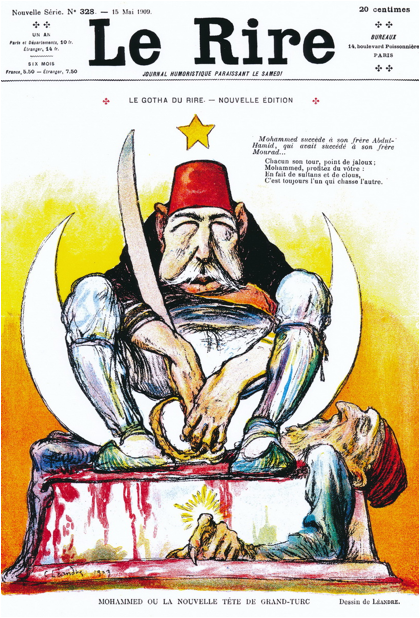
Finally, we see on the 15 May 1909 cover of Le Rire a satirical rendition of Sultan Mehmed V perched on his brother Abdul Hamid IIÕs corpse. The inescapable nose sticks up in profile. In our opinion, Charles LandreÕs caricatures of the two sultan brothers is brilliant. They capture the essence of it all. How appropriate - except brother Abdul Hamid was still alive and died of pneumonia in February 1918. You have to appreciateÕ MehmedÕs jowls.
We close by asking does it really matter what they looked like? The deeds carried out in their name speak volumes.
Acknowledgements
We thank Missak Kelechian for obtaining for us some years ago a copy in Beirut of the Armenian volume on Sultan Hamid. There are few copies around with fresh, unmarred covers. Thanks also to Ms. Donna Sammis of Stony Brook University Library for help in obtaining through Interlibrary Loan some materials to which we would otherwise not have had access. Scans were generally made from items that we own.
Select Bibliography
Allen, William (1984) The Abdul Hamid II collection. History of Photography 8, no. 2, 119-145.
Anonymous. (1908) In Constantinople 31 JulyÉ Photo by Weinberg. LÕIllustration (Paris) 66e anne No. 3415 Samedi 8 Aot 1908. Story pg. 104.
Mickelwright, Nancy (2000) Personal, public and political (re)constructions: photographs and consumption. In ÒConsumption studies and the history of the Ottoman Empire, 1550-1922: an introductionÓ. Ed. by Donald Quataert). Albany: State University of New York Press.
Monroe, W. S. [Will Seymour] (1907) ÒTurkey and the Turks. An account of the lands, the peoples, and the institution of the Ottoman EmpireÓ (Boston, L. Page and Co., Accessible online at https://archive.org/details/turkeyturksaccou00monrrich
Osmanoglou, Aich (1991) ÒAvec Mon Pre Le Sultan Abdulhamid de son palais a sa prison.Ó *(Traduit de Turc par Jacques Jeulin). *Ėditions L’Harmattan (Paris). See
http://www.editions-harmattan.fr/index.asp?navig=catalogue&obj=livre&no=5278
Pears, Sir Edwin (1916) ÒForty Years In Constantinople: the recollections of Sir Edwin Pears (1873-1915).Ó London: Jenkins.
https://archive.org/details/fortyyearsincons00peariala
Rgla, Paul de (1902) ÒAu Pays de lÕespionnage: les sultans Mourad V et Abd-ul-Hamid II.Ó (Paris:
Librairie J. Strauss).
Roberts, Mary (2013) Ottoman statecraft and the ÒPencil of NatureÓ. Photography, painting, and drawing at the court of Sultan Abdlaziz. Ars Orientalis (Washington, DC) 43, 11-30.
Sever, Aytek (2010) ÒA Pan-Islamist in Istanbul: Jamal ad-din Afghani and Hamidian Islamism, 1892-1897.Ó A thesis submitted to the Graduate School of Social Sciences of Middle East Technical University, Ankara. http://etd.lib.metu.edu.tr/upload/12612440/index.pdf
Shaw, Stanford.(1973) A promise of reform: two complimentary documents. International Journal of Middle East Studies 4, 359-368.
Shaw, Stanford.(1991) Sultan Abdul Hamid II: last man of the Tanzimat, pgs. 179-197; in Tanzimatin 150. Yildnm Uluslararasi Sempozyumu:* bildiriler*, 25-27 Aralik 1989, Milli Ktphane, Ankara. Edited by Isin Duruz and Gnl Byklimanli, Ankara: T.C. Kltr Bakanligi. Milli Ktphane Baskanligi.
Ter-Minassian, Anahide (1995) Les dessins satiriques dans le priodique armnien Gavroche (1908-1920). REMM, Revue du monde Mussulman et de la Mditerane No. 77-78, 123-143.
Vambery, Arminius (1904) ÒThe Story of My Struggles, The memoirs of Arminius Vambry, Professor of Oriental languages in the University of Budapest.Ó London: T. Fisher Unwin, 2 volumes.
For volume 1 see https://archive.org/details/storymystruggle00vmgoog
Yazechean, Gurgen [Yazidjian, Kurken] (1980) ÒAptiwl Hamit B., Karmir SultÔane: HarakitsÔ Osmanean patmutÔiwn ew hastatutÔiwnnerÓ [Abdul Hamid, the Red Sultan: a Comprehensive Ottoman History and Institutions], Beirut: Tp. Sevan..